
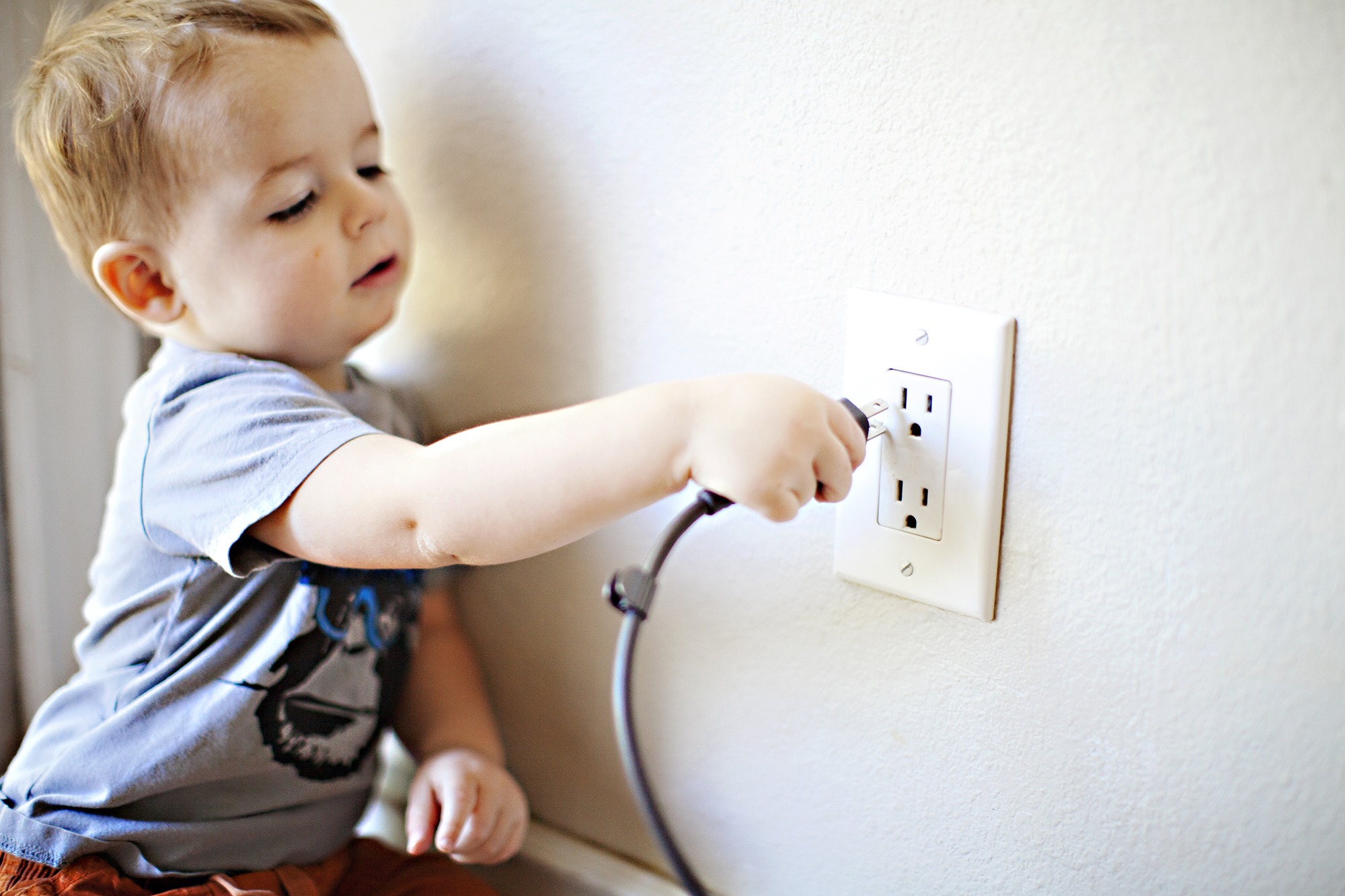
Electrical Cord Safety
- Make sure cords are in good condition–not frayed or cracked.
- Buy the right cord for the job. Electrical cords are rated for use. Always use the proper cord for the proper conditions.
- Never place cords in high-traffic areas.
- Never nail or staple cords to the wall, baseboard or any other object.
- Do not place cords under carpets, through a doorway, or in places where people may be walking.
- Pull the plug, not the cord, when unplugging an electrical device.
- Never touch a plug when your hands are wet, or if you are touching metal.
- Check to see that cords are not overloaded.
- Make sure extension cords have safety closures to help prevent shock hazards.
- Coil up excess cord length and keep the coil intact with plastic ties or Velcro straps.
- Extension cords are for temporary use. If you need a permanent solution, call an electrician.
Ground Fault Circuit Interrupters (GFCIs)
A GFCI is a sensor attached to electrical outlets that identifies current leakages in an electrical circuit. The GFCI will then interrupt power fast enough to help prevent serious injury from electrical shock.
- Use GFCIs in any area where water and electricity may come into contact, such as outdoors, or in kitchens, bathrooms or your laundry room.
- Test GFCIs according to the manufacturer’s instructions monthly and after major electrical storms to make sure they are working properly.
- Replace all GFCIs that are not working properly, but never replace a GFCI with a standard non-GFCI outlet or circuit breaker. Ensure this work is done by a licensed electrical contractor.
Safely Using Entertainment and Computer Equipment
- Check to see that the equipment is in good condition and working properly.
- Ensure there are no cracks or damage in wiring, plugs and connectors.
- A certified surge protector or power bar will protect your equipment in the event of a voltage surge. Use a surge protector bearing the seal of a nationally recognized certification agency.
- The best way to protect your electrical gadgets is to unplug them when they are not in use.
Light Bulb Safety
- Make sure the wattage of your light bulbs aligns with the wattage of your fixtures.
- Replace bulbs that have higher wattage than recommended.
- If you do not know the correct wattage for the fixture, check with the manufacturer of the fixture.
- Screw bulbs in securely. Loose bulbs may overheat.
Halogen Floor Lamps
- Halogen floor lamps operate at much higher temperatures than standard incandescent light bulbs.
- Never place a halogen floor lamp where it could touch drapery, clothing or other flammable materials.
- Be sure to turn the lamp off whenever you leave the room for an extended period.
- Never use halogen floor lamps in children’s bedrooms or playrooms.
Plug Safety
- Make sure your plugs fit your outlets.
- Never remove the ground pin (the third prong) to make a three-prong fit a two-prong outlet as this could lead to an electrical shock.
- Never force a plug into an outlet if it does not fit. Plugs should fit securely into outlets.
- Avoid overloading outlets with too many appliances or gadgets.
Using a Space Heater Safely
- Space heaters are meant to supply supplemental heat.
- Keep space heaters at least one metre (three feet) away from any flammable materials such as bedding, clothing, draperies, furniture and rugs.
- Do not use portable heaters in rooms where children are unsupervised and remember to turn off and unplug them when they are not in use.
- Do not use space heaters with extension cords. Plug them directly into an outlet on a relatively unburdened circuit.
Wiring Safety
- Unless you are licensed to do electrical work, make sure you hire a licensed electrician for electrical repairs, maintenance and installations.
Additional Electrical Safety Resources
The Electrical Safety Authority (ESA) has a dedicated online resource for homeowners. Visit esasafe.com and learn more about home buying, renovations, buying and selling a home and much more.
If you’re looking to complete work on your home’s electrical system, be sure to hire a licensed contractor to complete the job. Find a Licensed Electrical Contractor near you with this online directory.
Learn about the dangers of low-voltage electrical shocks through this helpful webpage from the ESA.